
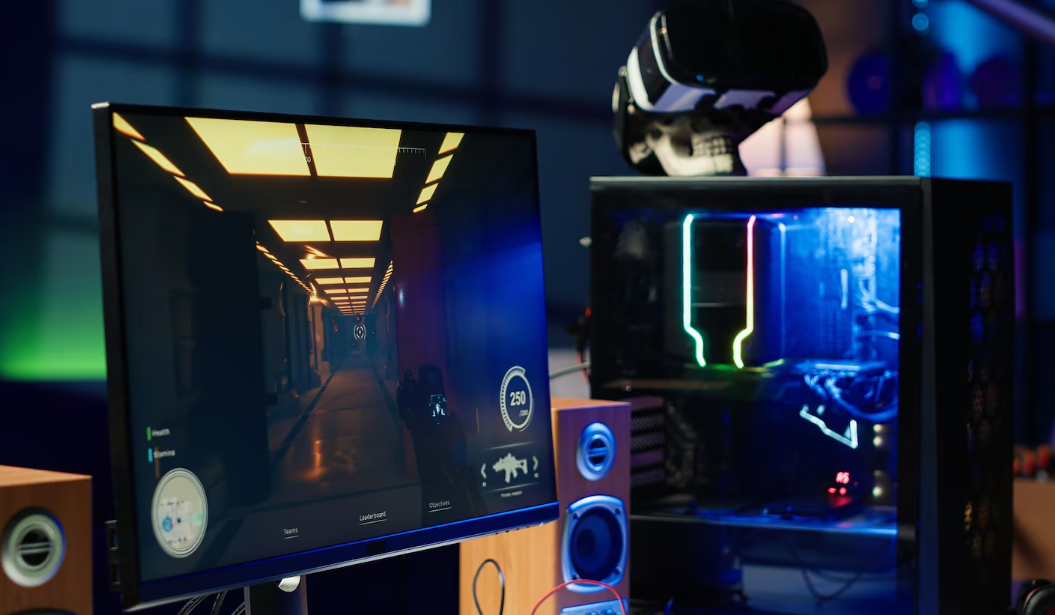
4K gaming puts real demands on hardware these days. The resolution shows every detail in sharp focus, but it requires your PC to work overtime to maintain smooth play. I have spent plenty of time testing different setups in my home office, swapping parts and running benchmarks on games from the last few years. Not every upgrade brings the same value. Some deliver noticeable improvements right away, while others offer only small gains that you barely notice during actual play. The key lies in matching the changes to what 4K truly stresses.
Graphics Cards: The Ultimate 4K Priority
Graphics cards carry the heaviest load in 4K environments. They handle the bulk of pixel pushing and special effects that make modern games pop. An older card struggles to keep up even if you drop the quality settings to medium. For instance, a three year old mid range GPU might manage 40 frames per second in Forza Horizon 5 at native 4K. Replace it with something from the latest series, and those numbers climb to 80 or higher with features like frame generation turned on. The jump feels immediate and rewarding. Many players overlook how much the VRAM capacity helps too. Cards with 12 gigabytes or more avoid texture pop in and keep things consistent across big open worlds. From my experience, this stands as the upgrade most people should prioritize first if their current one falls short. Titles like Black Myth Wukong showcase this well, where detailed environments and lighting effects require strong hardware to avoid blurry or choppy results.
Central Processing Units (CPUs): A Lower Priority
The central processing unit does not need as much attention for straight 4K gaming. It manages game world simulation and background processes, but the graphics card drives the visuals. A decent six core processor from recent years handles most titles without issue. I ran comparisons between an Intel i5 from 2020 and a newer i7, and the frame rate difference at 4K stayed minimal in single player campaigns. Only consider a CPU upgrade if you play games heavy on simulation like strategy titles or if you stream your gameplay at the same time. Otherwise, the investment returns less than you expect. It pays to weigh costs carefully instead of chasing quick wins like jackpotjill pokies online that leave you with empty pockets and no better rig.
System Memory (RAM): Preventing Stutters
Memory upgrades help in ways that creep up on you. Games at 4K use large texture packs that fill up available RAM fast. Sixteen gigabytes works for basic play, but adding tabs for guides or voice chat pushes it to the limit. Thirty two gigabytes of DDR4 or DDR5 smooths out those moments and prevents frame drops during heavy scenes. Last year I doubled the memory in a friend’s machine, and he reported fewer hitches in Cyberpunk 2077 during driving sequences. The type of RAM matters less than having enough. Dual channel setups with matching sticks perform best, and you can often reuse existing modules if the speed matches. In longer sessions the extra headroom keeps background tasks from interfering with your frame times.
Storage (SSDs): Eliminating Load Times
Storage makes daily use more enjoyable without changing the core gameplay. Traditional hard drives take forever to load large game files, especially when the install size tops 100 gigabytes. An NVMe solid state drive changes that completely. Models with read speeds above 7000 megabytes per second load maps almost instantly. I installed a 2 terabyte drive in my main system and noticed boot times for Windows drop to under 10 seconds. Game launches follow the same pattern. If you store everything on mechanical drives, this upgrade ranks high on the list because it affects every session. Red Dead Redemption 2, for example, goes from a full minute of waiting to just 15 seconds once the files sit on fast storage.
Power Supplies (PSUs): Protecting Your Investment
Power supplies form the foundation that many ignore until problems appear. High end graphics cards demand stable power delivery, often 400 watts or more during peaks. An undersized or aging unit can cause crashes or worse. Upgrading to an 850 watt Gold certified model provides safety and efficiency. It runs cooler and quieter too. When I replaced the power supply in one build after adding a new GPU, the system stopped random restarts that had plagued it before. This change costs around 100 dollars but protects the rest of your investment. Cheap units fail under sustained 4K loads where the GPU and CPU both pull hard at the same time.
Cooling Solutions: Sustaining Peak Performance
Cooling keeps performance steady under long sessions. 4K pushes components hard, and heat causes throttling that cuts frame rates. A basic air cooler handles entry level loads, but an upgraded heatsink or liquid cooler maintains lower temperatures. Drops of 10 to 20 degrees Celsius mean the hardware stays at full boost clocks longer. My current setup uses a 360 millimeter radiator, and the GPU stays below 65 degrees even in demanding benchmarks. Case fans add to this by improving overall airflow without much expense. The difference shows up after two hours of play when stock cooling starts to pull back on speeds.
Motherboards: Hold Off Unless Necessary
Motherboards rarely top the priority list unless you change processors. They connect everything and provide features like faster storage slots or extra USB connections. If your board supports the latest standards, you can skip this for now. I kept my existing motherboard through two GPU swaps and a RAM increase, and it caused no compatibility headaches. Only update if the socket type no longer fits new CPUs or you need specific ports for your setup. Newer boards do add conveniences such as built in WiFi 7, but those extras rarely justify the price alone for gaming.
Conclusion: Targeted Upgrades Win the Race
In the end, targeted upgrades beat random replacements every time. Start with the graphics card for the biggest impact. Follow with memory and storage for everyday smoothness. Power and cooling support the new parts reliably. Over time, you build a system that handles 4K without constant upgrades. I have watched setups last four or five years this way while others get replaced yearly because owners chased trends instead of real needs. Your play style dictates the order. Test your current rig with tools like MSI Afterburner to spot the weak links. That data guides smarter decisions than guesswork ever could.
A friend of mine stuck with his old CPU and just refreshed the GPU plus RAM. He now runs everything at 4K ultra with frame rates he never thought possible on a three year old platform. Another buddy went all out on a full new build and saw only marginal gains beyond what the graphics card alone delivered. The lesson stuck with me. Focus on the parts that actually move the needle in your games instead of spreading the budget thin across everything at once. That way the machine stays fun and responsive for the long haul without draining your wallet faster than necessary.